Searching for medieval books and bindings in the archives of the Nijmegen city council (held by the Regionaal Archief Nijmegen, aka RAN), better known as the OAN (Old Archives Nijmegen), I came across the ‘accounts of the city of Nijmegen’. The oldest accountbook (with the signature NL_NmRAN_1-685) consists of two quires with a (modern) wrapper around them. It is dated 1382 and is written on paper (image 1), a writing material that is not often encountered around the Nijmegen Archives at that time. I was therefore in doubt whether this copy was actually written in 1382, or whether it concerns a copy from the 15th century.

A watermark
The watermark is immediately noticeable in the paper of 1-685. It is a beautiful side view of a Moor’s head (image 2). A watermark is an image ín (and not ón) the paper. This is made by attaching an figure of iron wire to the sieve used to scoop the paper (image 3). Because the image lies on the lines of the sieve, the paper becomes slightly thinner at this point. When the light shines through the paper, you see the image.
I can fully imagine that there are people who take offense at the word Moor and at this image. I can’t do anything about the depiction, it was made like this 600 years ago. This blog is not to glorify or condone this image, but to show the science behind watermark dating. The word Moor is currently the word this particular watermark design is referred to in multiple languages and until there is a better alternative I will conform.
I could have chosen not to write this blog so as not to show this image, but I think history should be talked about and not looked away from when it gets painful.
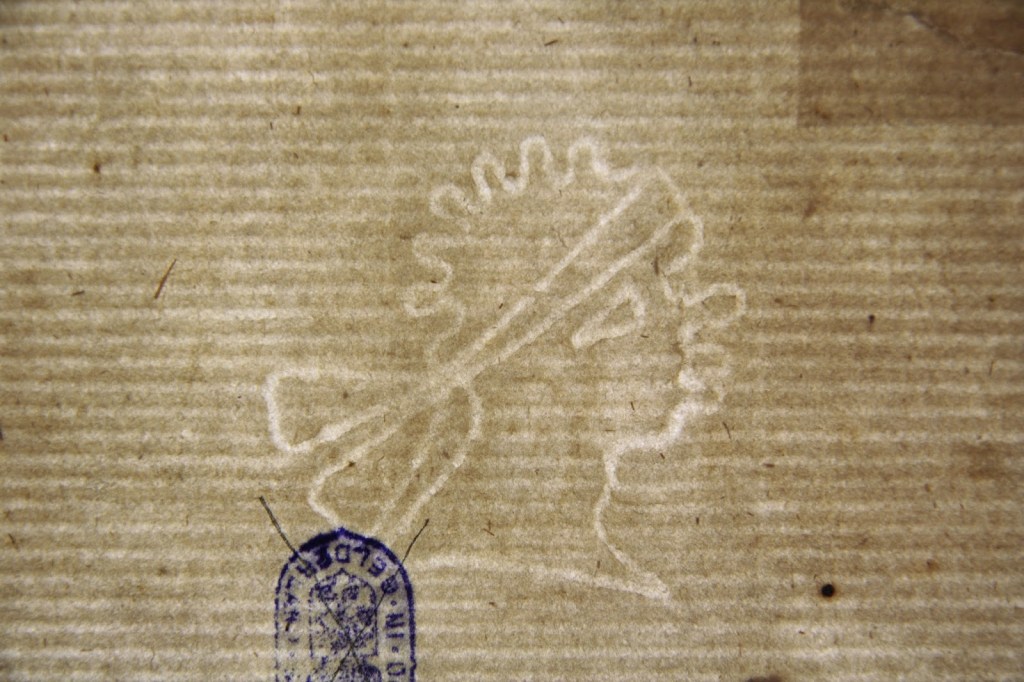
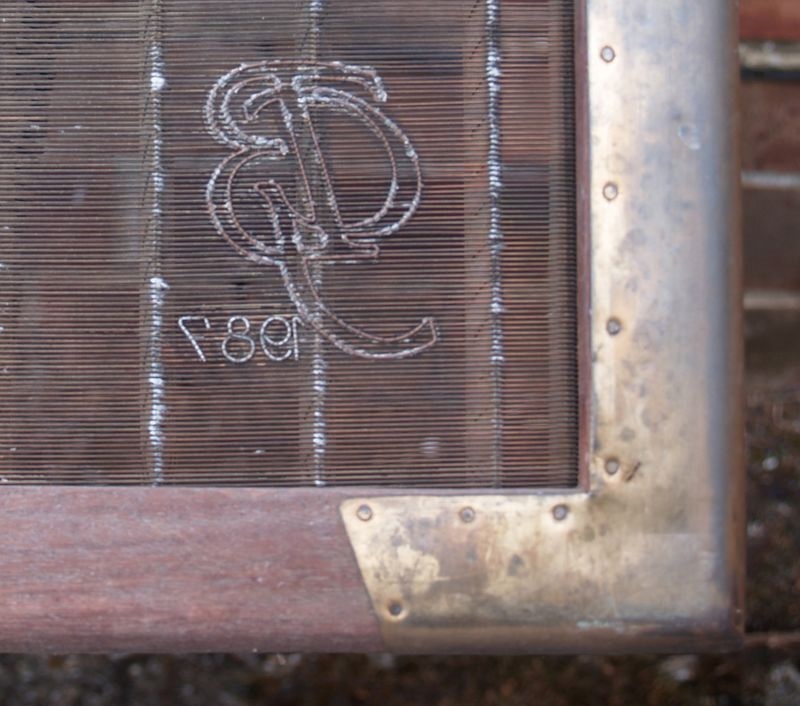
You will always find a watermark in paper from the late Middle Ages; it was the way the various paper mills put their “stamp” on the paper they made. Each paper mill had its own image.
Dating by watermark
When an image was created, for example an ox head with a cross above it, it lasted for a certain amount of time. After one or two years, the image was so bent and partially broken that it had to be replaced. This new ox head with cross looked slightly different from its predecessor; the horns were longer, the eyes smaller, the crossbar of the cross slightly higher, and so on.
The variations in the watermarks can help date a book. The paper made for 1 year has an identical watermark. This paper was sold directly to intermediaries, who in turn sold it to writers and bookbinders. They used it as soon as possible. You can assume that a new sheet of paper was used in a book within 2 years. When one and the same ox head is found in 4 books, and 2 of those books are dated 1432 and 1438 respectively, you can assume that the 2 undated books come from the period 1430 to 1440.
Over the last 20 years, a huge amount of research has been done on watermarks, which has resulted in several watermark databases on the Internet. Here you can search for watermarks and where to find them. During my study of Medieval Literature, I participated in such a study myself, so fortunately I know my way around such databases. I’m going to try to find my Moor again.
Searching for our watermark
On the website of Bernstein, an umbrella website for paper research (http://www.bernstein.oeaw.ac.at/twiki/bin/view/Main/PaperDatabases.html), among the many databases I find some that already have paper from the 13th century. I choose the Austrian Academy of Sciences, which I know has a very nice search system http://www.wzma.at/. On the basis of images you have to make choices again and again, so that your search area becomes smaller and smaller. For my Moor, the final query becomes: Figuren, anthropomorphe / Kopf / Mohr / frei, mit Kopfbedeckung / Stirnband / ohne Beizeichen / mit Augen / Linie Hinterkopf sichtbar / Stirnbandende zweiteilig.
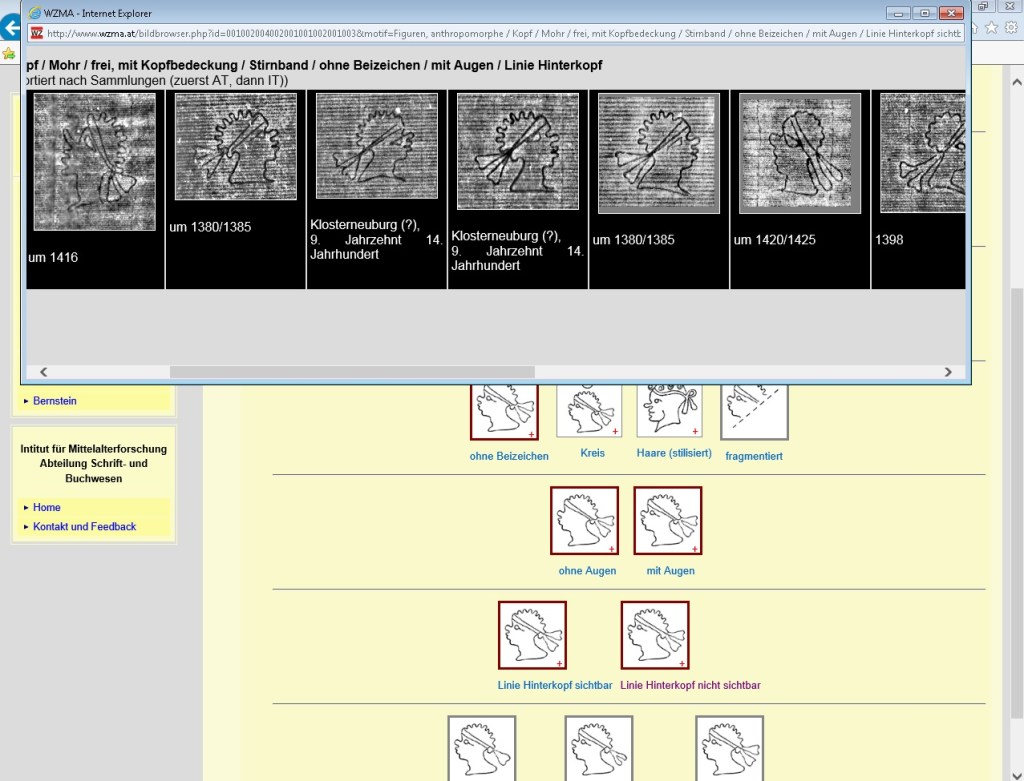
The result is a pop up creen with 16 images. All Moors from the side with a headscarf (afbeelding 4). And yes, mine is there too! This one is a watermark from a msnuscript dated 1380-1385, probably written in the Augustiner Chorherrenstift in Klosterneuburg, Austria (afbeelding 5). (more about this manuscript: http://manuscripta.at/diglit/AT5000-320/1/thumbs)
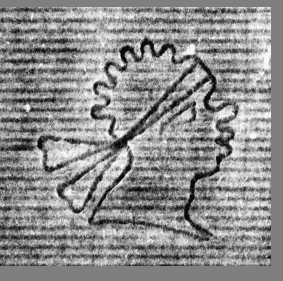
The dating couldn’t be better: my watermark from 1382, and this other watermark from 1380-85. Conclusion: the city accountbook is actually an original from the year indicated in it, and not a later copy. Nice stuff, those watermarks!


 Bound for history
Leave a comment